




How to get your private clinic into the national press: a former health correspondent’s guide
 Paul GallagherPR consultantPublished · Updated · 7 min read
I spent almost 10 years as a health correspondent at a national newspaper, which means I’ve sat on both sides of the media/PR table. I’ve sent out pitches as a PR, but I’ve also received them (many of them) as a journalist, deciding which ones deserved further investigation, which might make a story and which would never even get opened.
A busy national health desk can receive dozens of approaches in a week, sometimes more. Only a small proportion will translate into published stories. There isn’t a magic formula or a fixed success rate, but there are some very clear reasons why certain pitches stand out – and why others fail.
Here’s what I’ve learnt, on the news desk and since moving into healthcare PR.
1. A story needs somebody to tell it
The strongest health stories usually have two essential ingredients: a patient with a compelling experience and a doctor or specialist who can explain the wider medical context.
A patient provides the human interest: perhaps they’ve undergone an innovative procedure, received an unexpected diagnosis or experienced a dramatic improvement in their quality of life. A doctor provides the expertise, explaining why the story matters and putting it into context. It’s the approach behind our work with VeinCentre, the UK’s largest vein care provider.
You don’t always need both. A genuinely interesting piece of research, new data or an expert’s assessment of a developing health issue can be enough. But a clinic that can offer a willing patient, with informed consent, alongside an articulate consultant has a significant advantage. Adding data, such as a rise in the number of Britons travelling to a foreign clinic for help, makes the pitch stronger still.
2. The media landscape has changed
There are fewer journalists than there once were, and those who remain are expected to cover more ground, across more platforms, with tighter deadlines.
Specialist health journalism is not immune. In October 2026, the BBC announced that it would remove its separate health editor role when Hugh Pym leaves in spring 2027, incorporating the responsibilities into the medical editor’s position.
For clinics, this means getting noticed is increasingly difficult. Journalists need information quickly, spokespeople who are accessible and stories that can be developed without weeks of additional work.
A good idea is only half the battle. Being able to deliver it matters just as much.
3. What a health desk simply won’t touch
There are certain warning signs that will make a journalist think twice, regardless of how much money a clinic has spent developing a campaign.
Miracle claims are an obvious example. Assertions that a treatment can cure a condition, reverse ageing or deliver unprecedented results need exceptionally strong evidence. Unsupported statistics, exaggerated success rates and claims that cannot be independently verified are equally problematic.
The same applies to consultants who are unwilling to speak directly to journalists. A written statement is useful, but it is rarely a substitute for a proper telephone interview. Journalists want to ask follow-up questions, challenge assumptions and explore the subject in more depth.
If your expert isn’t available to talk, another clinic or university researcher probably will be.
4. Know the rules governing health claims
Healthcare PR has to be handled particularly carefully because inaccurate information can influence people’s decisions about their health.
The Advertising Standards Authority’s CAP Code doesn’t cover press releases sent to journalists, but it does cover your website, ads and social media, which is exactly where a journalist will check you out. It requires objective health claims to be supported by evidence, and claims about the effectiveness of therapies will generally need robust evidence, often in the form of clinical trials. If your pitch says something you couldn’t legally put in an advert, a health desk will notice.
Be particularly careful with phrases such as “clinically proven”, “game changer” (arguably the most overused phrase in health journalism) and “the first”. If you say a treatment is clinically proven, you need to be able to demonstrate precisely what has been proven, by which research and in what circumstances.
Doctors also have professional responsibilities. The General Medical Council’s *Good medical practice* guidance requires doctors to ensure their public communications are accurate, not misleading and do not present opinion as established fact.
Patient confidentiality is another important consideration. A patient’s consent must be properly obtained before sharing identifiable clinical information. Simply removing someone’s name does not necessarily make their story anonymous, particularly if other details could identify them.
5. Ten questions to answer before you pitch
Before approaching a national journalist, make sure you can answer these 10 questions:
- What’s the story? Sum it up in one compelling sentence (and try to fit it in the subject line).
- Why now? Is there a topical hook, new research or a news development?
- What’s the evidence? Supply the original research, statistics or data.
- Who can speak? Name your consultant and explain their expertise.
- Are they available? Can they do a telephone interview at short notice?
- Is there a patient? Is someone willing to share their experience?
- Has consent been obtained? Make sure the patient understands what publicity involves.
- What can you supply? Think photographs, case studies, reports and supporting material, such as video clips for online.
- Are the claims defensible? Check every statistic and clinical assertion.
- What’s the ask? Make it clear what you want the journalist to do.
6. The biggest reason pitches fail
In my experience, the most common problem is that clinics confuse what they want to promote with what a journalist wants to publish.
A new treatment, an additional consultant or the opening of a clinic might be significant commercial milestones, but that doesn’t automatically make them news.
Journalists are looking for something that matters to their readers. That could be a new development in medical research, an emerging health risk, a surprising statistic, a debate about NHS provision or a patient’s remarkable experience.
The clinic should be part of the story, not necessarily the story itself.
7. Think beyond the press release
Finally, don’t assume that media coverage has to begin and end with a traditional press release.
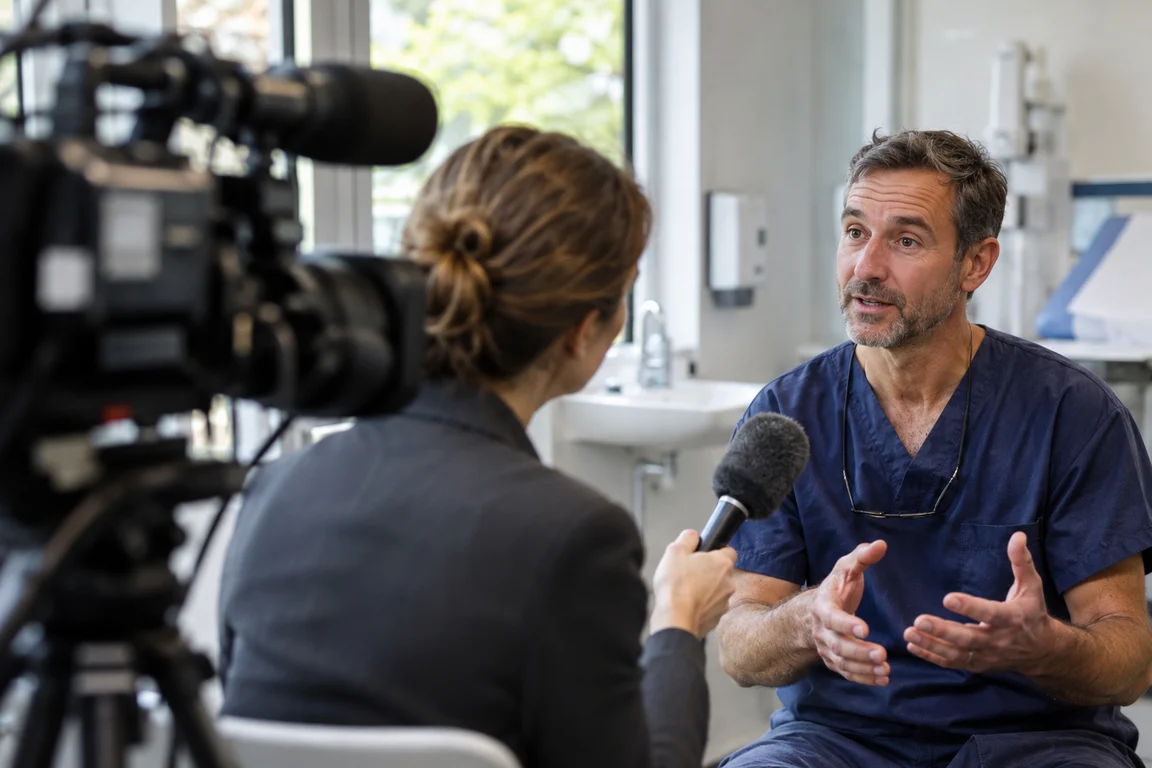
A consultant who can offer informed comment on a breaking health story may be more valuable to a journalist than a dozen carefully packaged announcements. Being available for broadcast interviews, contributing to a wider debate or providing expert analysis can build relationships that lead to opportunities further down the line. And they often do.
The clinics that consistently achieve good media coverage are usually those that understand this distinction. They have something genuinely interesting to say, the evidence to support it and experts who are prepared to say it.
That’s what gets journalists listening and, ultimately, gets stories published.
Getting your clinic into the national press: your questions answered
How do private clinics get national press coverage?
By offering journalists a story rather than a promotion. The strongest usually combine a patient with a compelling experience, a consultant who can explain the medical context and evidence to back it up. Consultants who are available to comment quickly on breaking health stories get noticed too.
Why do most clinic press releases get ignored?
Usually because the clinic has confused what it wants to promote with what a journalist wants to publish. A new treatment, consultant or clinic opening is a commercial milestone, but it isn’t news unless it connects to something that matters to readers.
Can a clinic use patient stories in PR?
Yes, with properly obtained informed consent. The patient should understand what publicity involves, and removing their name doesn’t necessarily make a story anonymous if other details could identify them.
What rules apply to health claims in clinic PR?
The CAP Code covers a clinic’s website, ads and social media, though not press releases sent to journalists, and requires objective health claims to be backed by evidence. Doctors must also follow the GMC’s Good medical practice, which says the information they communicate must be accurate and must not present opinion as established fact.
Does press coverage help a clinic’s Google ranking?
It can. Coverage on national news sites often includes a link to your website, and those links help patients find you on Google and in AI answers from tools such as ChatGPT and Google’s AI Overviews.
Want your clinic in the national press?
Coverage on a national news site often comes with a backlink too, which helps patients find you on Google and in AI answers. No agency can force a journalist to run a story, but knowing what a health desk is looking for makes coverage far more predictable. If you’d like to know what coverage is realistic for your clinic, book a free hour with our team.